
Hazeuzangers’ Urk, Zwolle & Omstreken
More than 291 times played this month
The name of the Hazeuzangers and the Hazeuliederen comes from Johannes Hazeu Corneliszo, a Dutch printer, publisher, and poet of edifying songs (1754-1835). His bookstore and printing house were located in Amsterdam, where he was admitted to the booksellers' guild in 1701. Hazeu wrote not only a large number of religious books for adults but also numerous works for children, which were sung in families and singing groups for more than half a century. The songbook from which the Hazeuzangers and Oud-Hallelujah still sing is called "Nieuw Stichtelijke Liederen voor de Families en Gezelschappen en Christiansen in nieuwe zangstijl" (New Edifying Songs for Families and Societies and Christians in a New Singing Style) by Dirk van Reyden. These Hazeuliederen are still sung by three singing groups in the Netherlands: the Hazeuzangers, Oud-Hallelujah, and a singing group in Zeeland. The psalms are sung from a part book dating from 1800. The four voices are the tenor (or church voice), the bass, the alto, and the treble.
For years, it was difficult to obtain music. Former choir members kept their songbooks when they left the choir. In recent years, the psalm book has been reprinted.
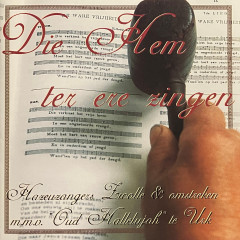
In the last century, there were singing groups around Zwolle that met once a week to practice. They were led by a cantor, who played the ut re mi fa sol, indicating the correct note. The cantor struck the time with a wooden mallet.
Many churches didn't have organs at that time, so the choirs were there to support congregational singing during services.
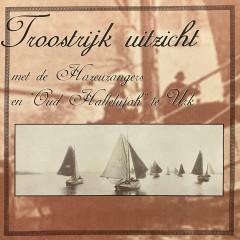
The choir from Urk (the oldest choir in Urk) originally consisted of fishermen who practiced on their ships during the week and supported congregational singing during services on Sundays.